Mangrove Ecosystem Restoration Model
The Mangrove Ecosystem Restoration Solution (MERS) Project, implemented by the Center for Applied Research on the Environment and Sustainability (CARES) at the American University in Cairo, aims to restore Egypt’s Red Sea mangrove ecosystems while empowering local communities through sustainable livelihoods. Launched in 2021 and continuing until 2026, the project demonstrates how Nature-based Solutions can enhance coastal resilience, biodiversity, and local economies. Operating along the Red Sea Governorate from El Gouna to Halayeb and Shalateen, it contributes to climate change mitigation, adaptation, and sustainable development. Mangroves serve as natural protectors of coastlines, support diverse marine life, and act as significant carbon sinks, making their restoration essential for both people and the planet.
The five main pillars of the project are as follows
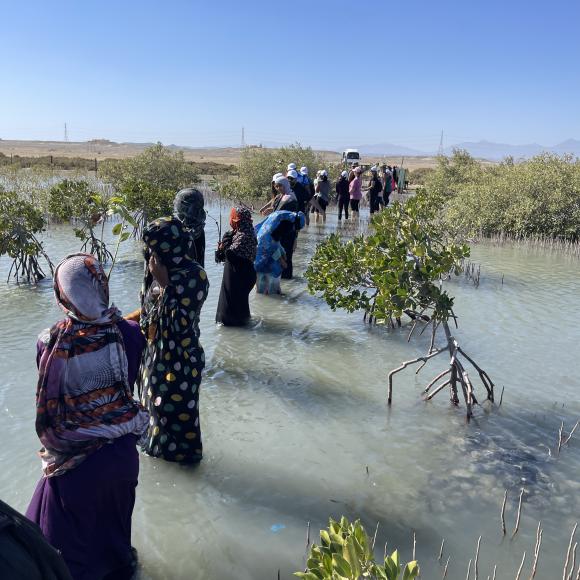
Mangrove Plantation
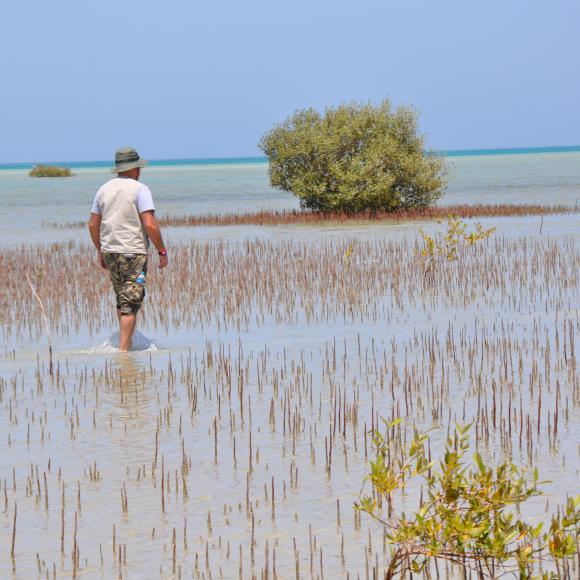
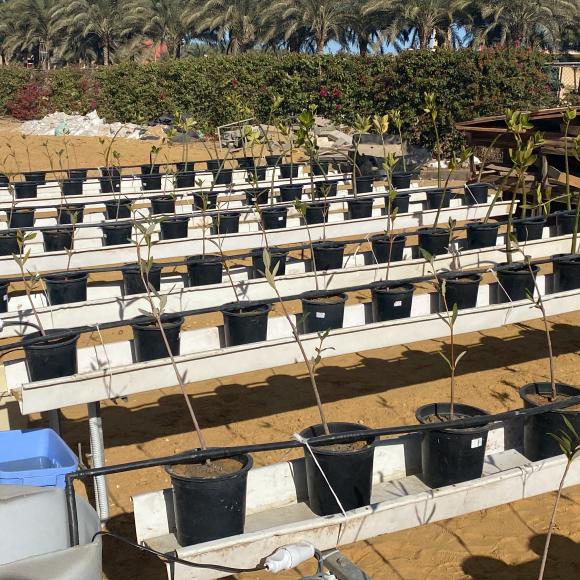
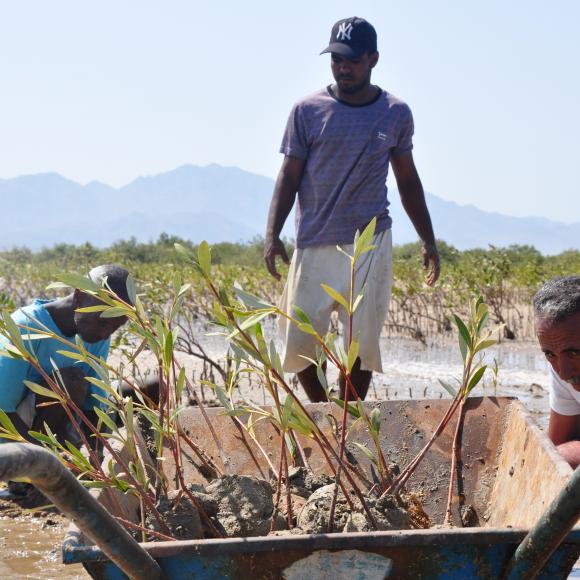
MERS aims to restore degraded mangrove areas along Egypt’s Red Sea coast by planting between 25,000 and 50,000 seedlings with strong community involvement. Plantation activities have been implemented in Hamata and Safaga in collaboration with local residents and youth.
Till September, 2025, the project will have successfully planted an additional 11,300 seedlings, bringing the total up to 32,400.
AUC Plantation
In line with American University in Cairo (AUC) and MERS Project commitment to environmental preservation and carbon emission reduction, the university planted 10,000 mangrove seedlings to offset the carbon footprint generated by the air travel of its delegation to COP27 in Sharm El-Sheikh.
Community Awareness and Participation
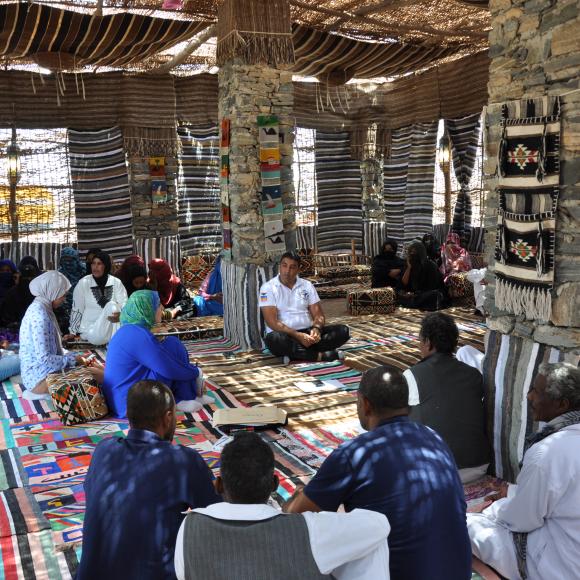
MERS engages diverse community members and stakeholders through inclusive participation and dialogue to promote scalable mangrove restoration and sustainability. Awareness sessions, webinars, exhibitions, and volunteering opportunities are organized to foster knowledge exchange and action. The overarching goal is to enhance awareness among specialists, researchers, youth, policymakers, decision-makers, and local communities, ensuring broad engagement and lasting impact. Key initiatives include:
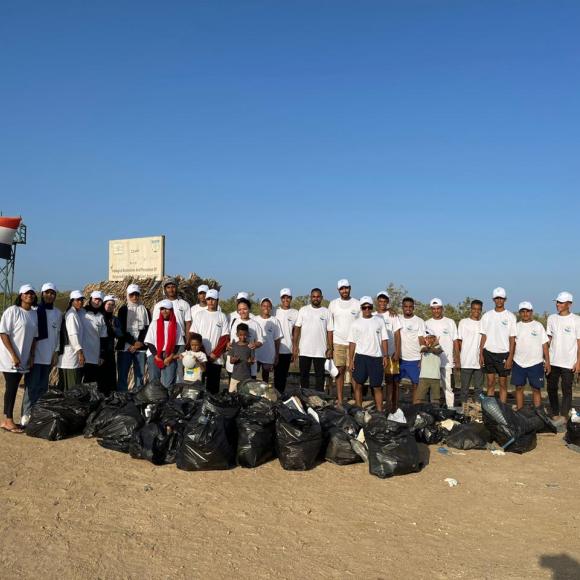
Safaga Beach Clean-up – October 2023
The initiative aimed to raise awareness and turn it into real action by involving citizens, youth, and local community members. In partnership with HSBC Bank and the Safaga community, the project organized a Beach Cleanup Day to restore part of Safaga’s coastline and support environmental protection.
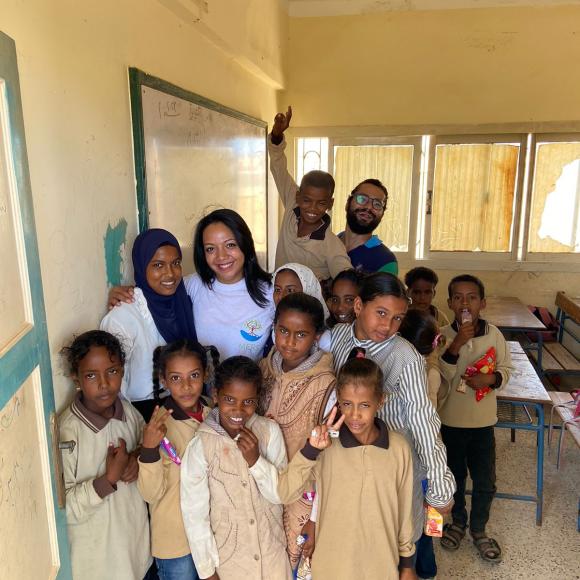
Hamata School Awareness Session – October 2023
In 2023, as part of the mangrove planting activities in Hamata and Safaga, a visit was conducted to Hamata Primary School in collaboration with the Directorate of Social Solidarity. Awareness sessions were delivered to students and teachers on the importance of mangroves and their benefits to the local community. The initiative aimed to inspire children to care for their environment and to encourage teachers to support and sustain this awareness.
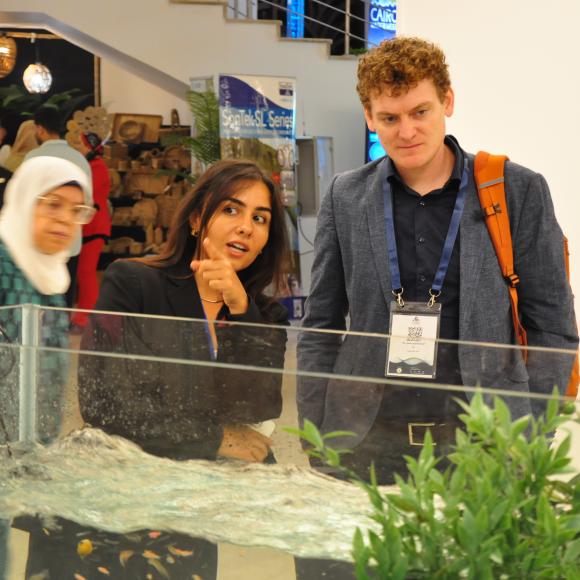
Cairo Water Week 2023
For three consecutive years, the project participated in Cairo Water Week to raise awareness about the importance of mangroves, highlighting both the plant itself and its broader benefits as recognized by researchers and specialists. In 2023, the project was represented through an exhibition, while in 2024 and 2025, it contributed to panel discussions and presentations addressing water, mangroves, and the project’s overall impact.
Literacy program for the local community - 2024
Recognizing that education enables a deeper understanding of one’s surroundings, the project launched a literacy initiative, successfully educating six members of the local community in Hamata.
World Mangrove Day Webinar MERS - Dayma - El Gouna Town Management - July 2025
On World Mangrove Day, AUC CARES represented the MERS project, collaborating with Dayma and El Gouna Town Management to share insights from local case studies. The initiative highlighted mangrove restoration, community engagement, and the local implementation of global environmental solutions.
Red Sea Youth Change Makers Bootcamp for Entrepreneurs - August 2025
To advance youth engagement in mangrove conservation, a five-day camp on the Red Sea coast brought together 50 university students to develop 27 innovative initiatives addressing environmental, water, and climate challenges. The top three projects received dedicated funding, ensuring their prompt implementation and exemplifying the project’s commitment to empowering the next generation of environmental leaders.


Economic Empowerment
MERS works to ensure mangrove forest scalability and protection by developing ecosystem-based, commercially viable small businesses with local communities to enhance livelihoods and economic resilience. The project actively involves community members in mangrove planting, integrating them into the broader development process while providing fair compensation. To date, more than 120 participants, over half of them women, have taken part. Building on this success, new initiatives, including an upcoming ecotourism project, are being designed to further advance local economic empowerment alongside environmental conservation.

Climate-Smart Agri-Hub
The Climate Smart Agri-Hub is helping reshape how mangrove conservation is understood and practiced along the Egyptian Red Sea. Recent findings show that mangroves expanded noticeably between 2003 and 2022, mainly due to catchment runoff. This growth highlights their resilience and provides important guidance for smarter coastal planning. At the regional scale, mangroves—predominantly Avicennia marina—hold strong carbon-storage potential yet remain threatened by grazing, oil spills, habitat loss, tourism, and waste, underscoring the need for stronger protection and better integration with community livelihoods.
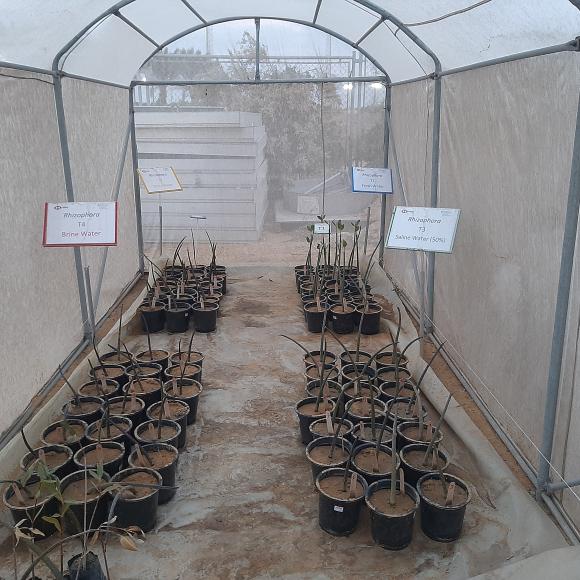
Research on salinity patterns also shows that A. marina and Rhizophora mucronata germinate and establish best in freshwater or moderate salinity, with growth declining at higher salinity levels. These insights are crucial for designing effective restoration and rehabilitation efforts.
GIS Platform
Launch Egypt’s first data-driven GIS platform on mangroves, CO₂ sequestration, and biodiversity to close knowledge gaps, support decision-making, and drive climate investments. And here is the MERS story map first draft version: Explore the Story Map